
Heating · 6 min read · Updated
No Heat in Your NYC Home? 8 Things to Check Before You Call
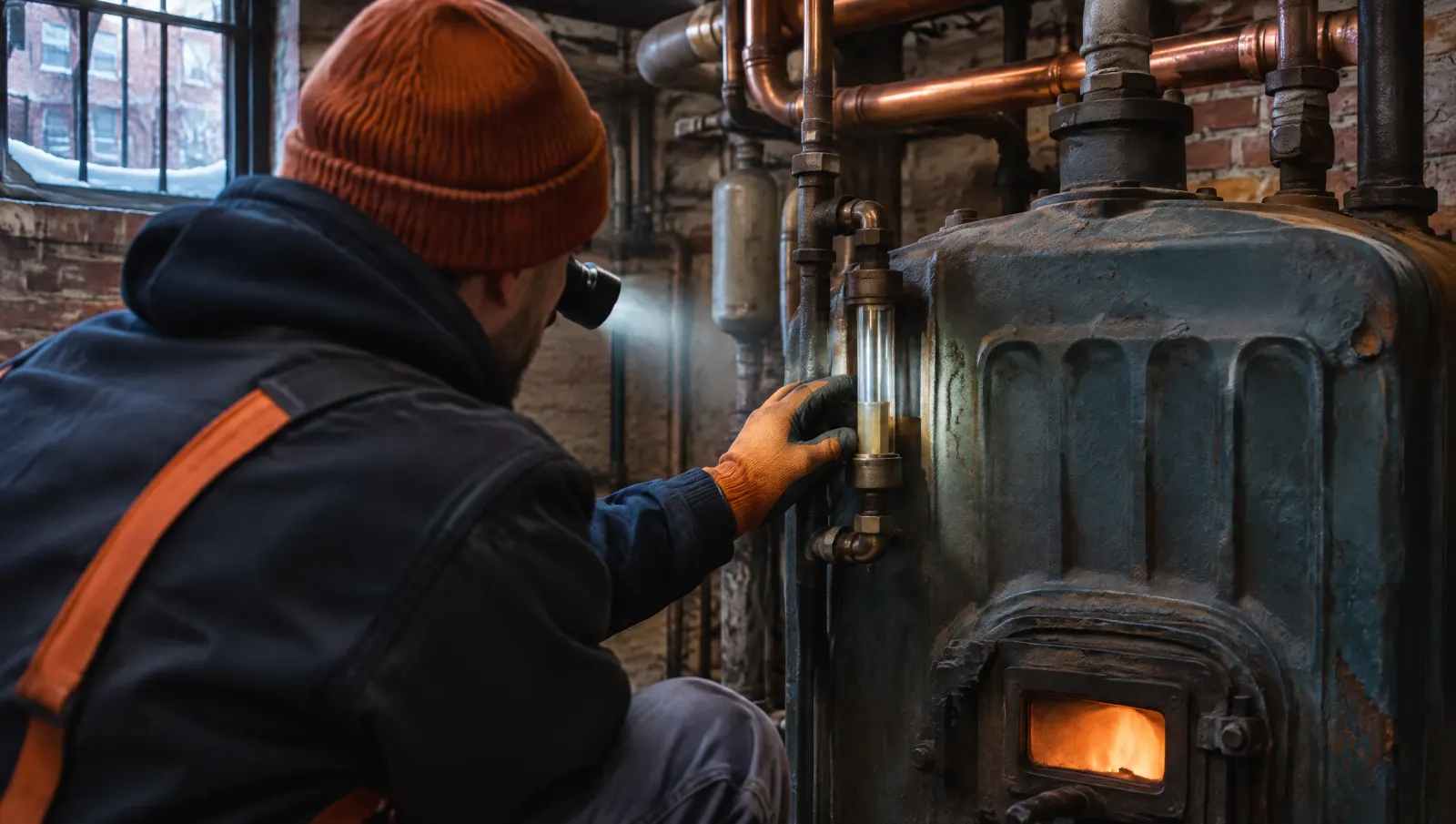
The short answer: when the heat goes out, check eight things first: the thermostat, the boiler or furnace service switch, the breaker, your fuel, any error code, the reset or lockout, the water level on a steam boiler, and the pressure on a hot water boiler. Chill Factor HVAC, based in Staten Island and serving all five boroughs, sees a good share of no-heat calls solved by one of these.
The first cold snap of the year always brings a wave of calls. Some are real breakdowns. Plenty are a switch someone flipped, a thermostat with dead batteries or a boiler that locked itself out and just needs a careful reset. Here is the order we would check things in your shoes.
Safety first. If you smell gas or a carbon monoxide (CO) alarm goes off, skip this list. NYC's Department of Housing Preservation and Development says to open nearby windows, go outside and call 911 (NYC HPD, 2026). Don't flip switches or try to relight anything.
What should you check first when the heat stops?
Start with the cheapest, most common causes and work toward the equipment. Most of these take a minute and need no tools.
- The thermostat. Make sure it is set to Heat, not Cool or Off, and set a few degrees above room temperature. If the screen is blank, change the batteries. A schedule someone programmed in the spring can also hold the heat down.
- The service switch. Most boilers and furnaces have an on/off switch that looks like a light switch, often with a red plate, on the unit or at the top of the basement stairs. It gets bumped off more than you would think, especially in a shared basement.
- The breaker. Look at your electrical panel for a tripped breaker marked boiler, burner or furnace. Reset it once. If it trips again, leave it off and call. That points to an electrical fault.
- Your fuel. With oil heat, check the tank gauge. An empty tank is a real cause, and running dry can pull sludge into the line. With gas, see whether your stove burners light. If they don't, the issue may be the gas supply, not the boiler.
- Error codes or blinking lights. Newer boilers and furnaces flash a code or a light pattern when something is wrong. Write it down or take a photo. It tells a technician a lot before they arrive, and your owner's manual may explain it.
- The reset button or ignition lockout. After a few failed tries to light, many burners lock out to stay safe. Oil burners often have a red reset button. Press it once. If it doesn't fire, stop. Pressing it again and again can flood the chamber with oil, which turns a small repair into a big one.
- The sight glass on a steam boiler. The sight glass is the small glass tube on the side of a steam boiler that shows the water level. If it is empty, the low water cutoff (a safety switch that shuts the burner off when water is low) has done its job. Don't add water to a hot, empty boiler. Let it cool and call us.
- The pressure on a hot water boiler. Hot water systems have a gauge, often combined with a temperature gauge. On a typical home system we like to see roughly 12 to 15 psi when cold. Much lower can mean a leak or a fill problem. Water dripping from the relief valve means pressure got too high. Both need a technician.
Steam, hot water or furnace: which do you have?
Knowing your system type tells you which checks apply. Here is the quick way to tell them apart.
| What to look at | Steam boiler | Hot water boiler | Furnace |
|---|---|---|---|
| Common in | Pre-war brownstones, walk-ups and older buildings | Houses and newer multifamily homes | Detached homes with ducts, common in parts of Staten Island and Queens |
| How heat reaches you | Hissing, clanking radiators | Quiet radiators or baseboards | Warm air from floor or wall vents |
| Key gauge to check | Sight glass (water level) | Pressure gauge (psi) | Air filter and error light |
| Safety device that shuts it off | Low water cutoff | Relief valve and limit controls | Flame and limit switches |
With a furnace, also check the air filter. A packed filter can make a furnace overheat and shut itself off. Here is how often to change it.
When should you stop and call?
Stop checking and call a pro if any of these happen. They are past the point of safe do-it-yourself fixes.
- You smell gas, smoke or a burning smell, or a CO alarm sounds (call 911 first)
- The breaker trips again after one reset
- The burner still won't fire after one press of the reset button
- The steam boiler sight glass is empty, or the hot water boiler pressure is very low or the relief valve is dripping
- You see water pooling under the boiler or soot around the burner door
Carbon monoxide has no smell. The CDC lists the most common symptoms of CO poisoning as headache, dizziness, weakness, upset stomach, vomiting, chest pain and confusion, and recommends CO detectors near every sleeping area (CDC, 2026). If people in the home feel flu-like at the same time the heat acts up, get everyone outside.
What does NYC law say if you rent?
If you rent, heat is your landlord's job, and the city sets the minimums. From October 1 to May 31, NYC HPD requires at least 68°F inside between 6am and 10pm when it is below 55°F outside, and at least 62°F between 10pm and 6am no matter the outdoor temperature. Hot water must be at least 120°F all year (NYC HPD, 2026). Contact your landlord first. If nothing happens, HPD says to file a complaint through 311.
What we see on the job
A lot of January no-heat calls trace back to something that showed up in the fall: a burner that took two tries to light, a boiler that short-cycled, a radiator that never got fully hot. That is why we push a fall tune-up so hard. A checked system fails less on the coldest night.
When you do call, tell us your system type, any error code and what you already checked. It saves time on the visit. Our heating service covers furnaces and boilers, and our emergency team picks up 24/7 with a real person on the phone. A diagnostic visit is $150 to $250, and we give you a flat quote before any repair starts. All our ranges are on the pricing page. No mystery charges.
The quick version
Thermostat, switch, breaker, fuel, error code, one reset, water level, pressure. That order fixes a fair number of no-heat calls in minutes. Anything involving gas smells, repeated trips, an empty sight glass or a dripping relief valve is a call to Chill Factor HVAC, not a weekend project.
Frequently asked questions
Why is my boiler on but there's no heat?
If the boiler has power but the radiators stay cold, the burner may be locked out after failed ignition, the thermostat may not be calling for heat, or a safety control has shut it down. On a steam boiler, low water is a common cause. On a hot water boiler, low pressure or air in the system can stop circulation. Check the thermostat, the reset button once and the gauges, then call a technician.
How many times can I press the reset button on my boiler?
Press it once. If the burner does not fire, stop and call a technician. Pressing the reset button on an oil burner again and again can flood the combustion chamber with oil, which creates a fire and smoke risk and makes the repair bigger.
Is it safe to add water to a steam boiler myself?
Not when the sight glass is empty and the boiler is hot. Cold water hitting hot cast iron can crack the boiler. Let it cool and have a technician find out why the water dropped, since a leak or a failing automatic feeder is often behind it.
What temperature does a NYC landlord have to keep my apartment in winter?
From October 1 to May 31, NYC HPD requires at least 68°F inside from 6am to 10pm when it is below 55°F outside, and at least 62°F from 10pm to 6am regardless of the outdoor temperature. Hot water must be at least 120°F all year. Tell your landlord first, and file a complaint through 311 if the heat is not restored.
What pressure should my hot water boiler gauge show?
On a typical home hot water system, around 12 to 15 psi when the system is cold is normal, and it rises a bit as it heats. Pressure near zero suggests a leak or a fill problem, and a relief valve that drips means pressure went too high. Both are worth a service call.
How much does a no-heat service call cost with Chill Factor HVAC?
A diagnostic visit from Chill Factor HVAC is $150 to $250 and includes an on-site inspection, a full system check and a written estimate. You get a flat quote before any repair starts. Prices are ranges because every building and system is different.